
How will our children and grandchildren get their own homes?
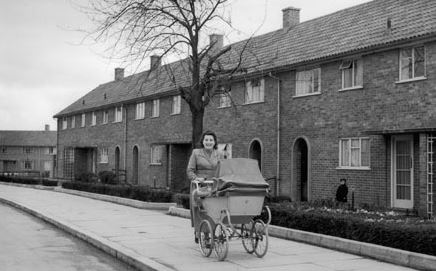
Council Housing in the 1950’s
Whilst we are experiencing all sorts of economic crises at present, the current housing crisis will affect future generations far more than the rest particularly for us living with the highest property prices in the UK.
A report published by The Policy Exchange Think Tank last month stated that “the housing crisis remains arguably the most acute and intractable socio-economic crisis facing the United Kingdom today.”
Although property has always been more expensive in the Southeast, past generations, with a decent job and some savings, have managed to buy their own home. Many also benefited from the Right to Buy scheme in the 1980s when they were able to buy their council house at a considerable discount. For those unable to buy, there was also plenty of social housing available up to the 1980s.
But today, lenders are usually requiring a deposit of at least 10% which equates to savings in the region of £50,000 or a very big helping hand from mum and dad. They also need a job providing sufficient income to support a mortgage of up to £400,000.
For the less fortunate, private rentals in our area are likely to cost in the region of £1500 to £2000 a month with no real security of tenure. And what happens when they reach retirement age and replace their income with a state pension? Paying huge rents leaves little over to invest in a pension.
That leaves social housing. Reigate & Banstead currently has a waiting list of over 1,300 on its housing register and is only able to allocate homes to, on average, 170 a year. Last year there were no new properties available.
This article was prompted by Rachel Reeves’ promising a £39 billion investment (over 10 years) in social housing in her June spending review. But whilst this looked like a substantial investment it clearly will not go far. The inference, from the Chancellor’s speech, was that the north of the country was likely to benefit more than us. She talked about schemes in Blackpool, Preston and Sheffield which had already prepared bids for some of this money.
In the so called “prosperous” south we are victims of both higher property prices and lower government investment. Also, our existing social housing stock is in poor condition and needs considerable investment to bring it up to modern day standards. This is limiting investment in new housing stock.
See our article on the history of social housing
So, what is the solution?
Well, to be honest, there is no easy solution, but we list a few ideas below.
The obvious solution is to build more social housing, but this will need financing. The Policy Exchange’s report advocated building 100,000 new properties a year. Although this will require significant investment, the country is currently paying out around £30 billion a year in Housing Benefit. This would reduce if more housing were available.
Planning regulations could be changed to ensure that every new build application includes an increased element of affordable housing. Obviously, developers have got to be able to make a profit, but apparently, many are very adept at avoiding their social housing obligations. If they can prove inadequate profit on a development they can avoid building social housing.
Also, the definition of affordable housing includes three categories: affordable housing (80% of market rental rates), shared ownership and social housing (50% of market rental rates). Most young homemakers really need social housing but often the first two categories make up the percentage of properties allocated to affordable housing.
Reigate and Banstead had wanted to make all new developments subject to a social housing provision but was overruled by central government. Their current policy, therefore, is that on sites with eleven or more properties, the council expects at least 30% of the homes to be affordable housing. But the policy does not fix the proportion of social vs. affordable rents – the mix being negotiated on a case-by-case basis.
Could the Government introduce legislation to impose a levy on all housing developments, regardless of size, to raise a fund for investment in social housing?
Reduce the discounts available for future Right to Buy applications and ensure that every property bought under the scheme is replaced with a new one.
Could the Government guarantee loans to social housing builders such as Raven Housing Trust to make new social housing developments economical and encourage an increased investment in new build properties?
There is also a shortage of land for new housing. Maybe we must consider some inroad into the Green Belt if it is to provide more social housing?
And lastly, there must be a skilled workforce to build these properties. Encourage and finance the training of young people to acquire the skills needed.
But whatever solutions are considered it will require firm commitments from local and central government. We are about to undergo a major change in local government with the move toward Unitary Authorities. When we come to elect our representative to this new body, we should be asking them what they plan to do to increase social housing. Funding will also be required from central government, so we also need our local MP’s commitment.
Sorry that there are more questions than answers!