Going way back in time, when our country was based on an agricultural economy, landowners provided tied cottages for their employees. Safe and secure if you kept the job. With the coming of the Industrial Revolution, philanthropic groups such as the Peabody Trust provided properties for the poor urban population.
The first Council Housing
Early social housing came from the Housing of the Working Class Act 1890. This legislation allowed for councils to build housing for rent but there was limited uptake.
After the First World War, the Addison Act 1919 (Housing and Town Planning Act), large government subsidies were provided to councils to build “Homes fit for heroes”. By 1939 over a million homes were built.
The rise of Social Housing
Following the Second World War, during which hundreds of thousands of homes were destroyed, the Labour Government made a national commitment to mass housebuilding. This continued into the 1950s when up to 300,000 homes were built a year, many council owned. Much of the housing in Tattenham Corner was build during this time and was originally council housing.
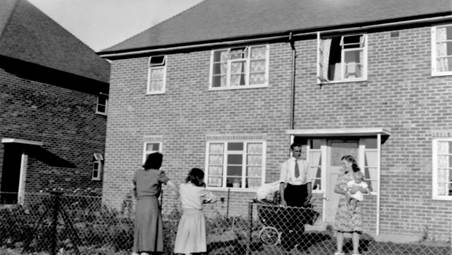
This continued in the 1960s and 1970’s but the quality of the build was not so good. The Preston Estate was built during this time providing housing for Reigate & Banstead residents but also rehousing some Sutton and Merton residents.
The start of the decline
Then came the 1980s and Mrs Thatcher. The Housing Act 1980 introduced Right to Buy enabling existing council tenants to buy their homes at considerable discounts ranging from 30 to 70% of the current valuation. By the 2000s over two million homes were sold. But councils were barred from using the proceeds from these sales to build new properties. It could only be used to pay off council debt or go to the treasury.
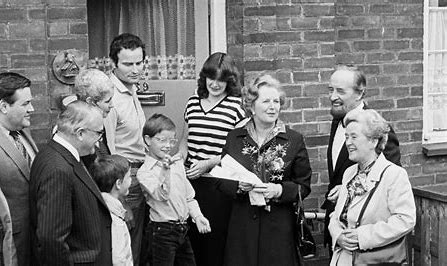
Tony Blair’s “New Labour” government had a major influence on social housing but was also controversial, He invested in improving council estates but pushed a shift toward more market-oriented, mixed-economy housing provision. This involved councils transferring their housing stock to housing associations.
Reigate & Banstead transferred its housing stock to the Raven Housing Trust (then known as RB Housing Trust) in 2002. The Sutton and Merton properties in Preston followed in 2005 and 2007. The Council still controls the allocation of social housing, but the supply and management of properties is controlled by housing associations, in our case mainly Raven Housing Trust.
The decline continues
From the early 2000s the emphasis shifted from universal provision to targeting to the most in need. Post 2010 spending cuts reduced grants for social housing with many new “affordable” homes being let at 80% of market rent, not true social rent. Waiting lists for social housing grew and homelessness increased.
The current situation
Now, social housing in England accounts for less than 17% of households, down from 31% in 1980. Most provision comes from housing associations financed by funding from Housing England.
Reigate and Banstead currently has a waiting list of over 1,300 households who have registered for social housing and on average are able to allocate around 170 per year. Last year no new properties were available.
Most house building locally are small infill sites of less than 10 properties with no provision for social housing. For larger developments builders are required to provide up to 30% affordable homes. But this can include shared ownership, and affordable housing (still too costly for many).
In Reigate and Banstead, Raven Housing Trust has a large number of properties that are in need of modernisation and significant investment is required to ensure these properties comply with current regulations. This has made it harder for them to invest in new properties to increase their stock and help meet the current need for new homes.
But there has been some movement in our area. The redevelopment of the Chavecroft site in Preston will provide five new three-bedroomed houses and 18 one and two bedroomed flats.
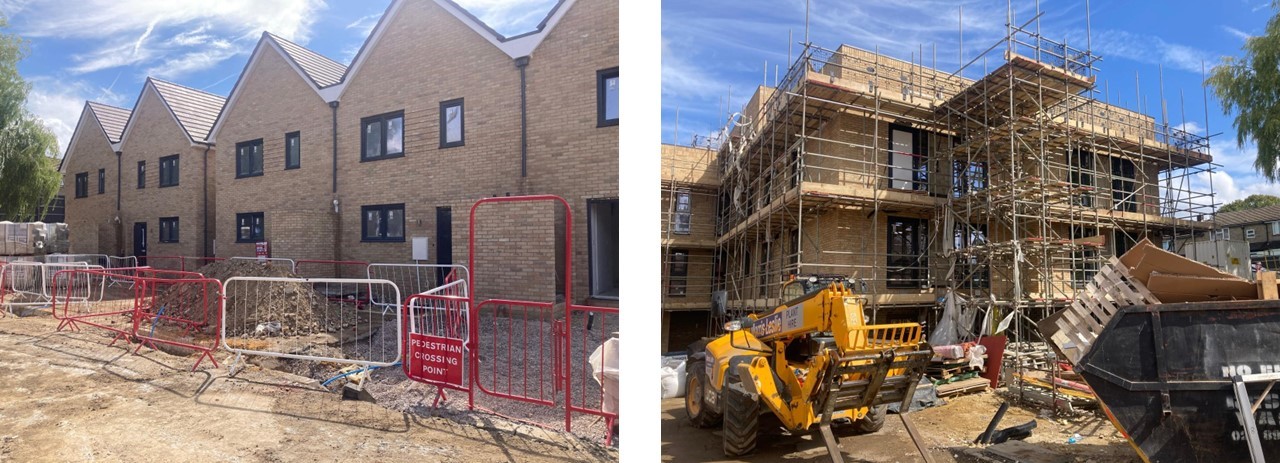
These should be available to occupy early next year. Raven is also redeveloping some of their garage sites. Three new houses are nearly completed in Downland Close, and a further development is underway in Ferriers Way, with more to follow. This may not help our own residents directly but will make a contribution to the current waiting list.